



























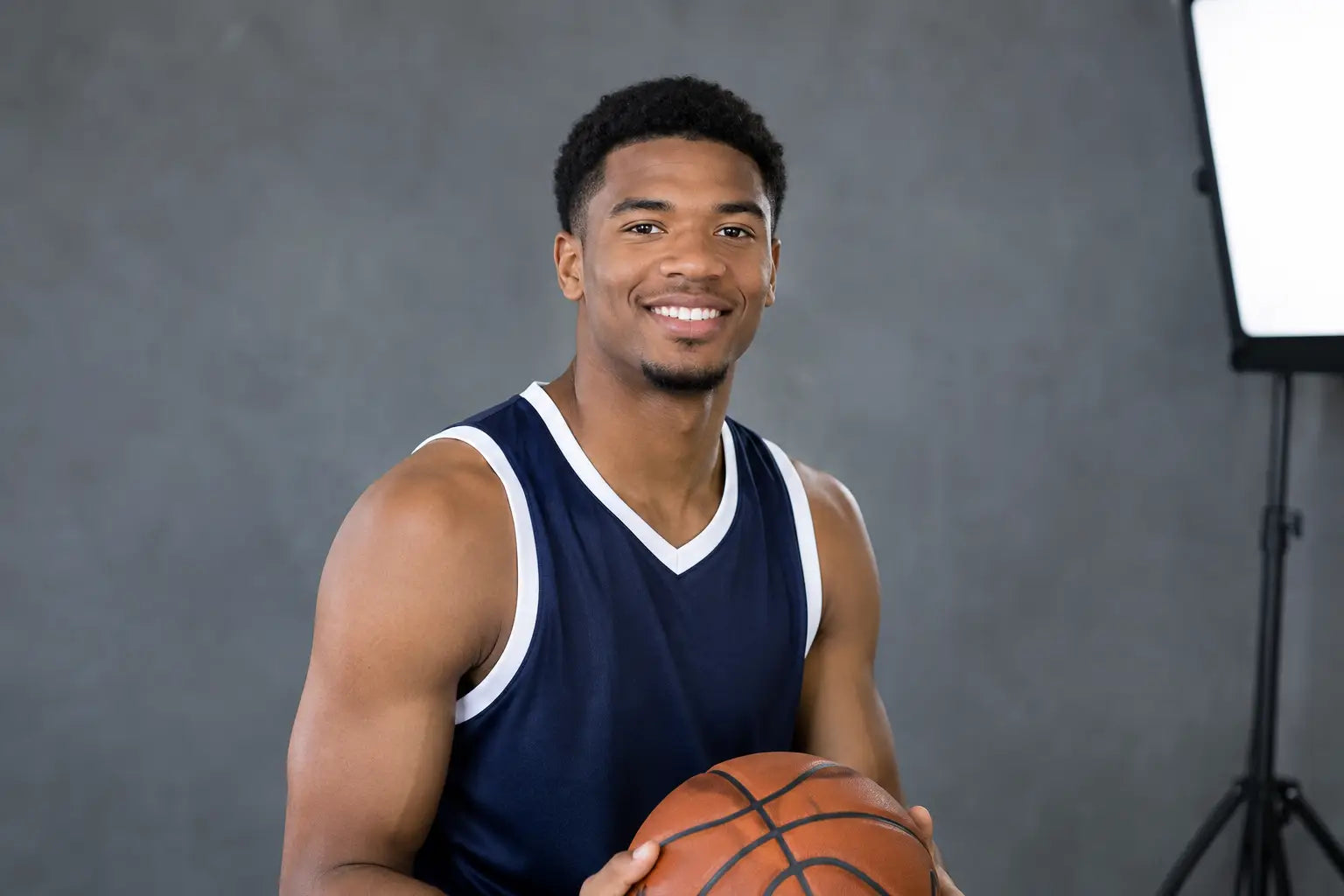

A media day moves quickly: athletes rotate through stations, uniforms need to look sharp, and every setup has to deliver a consistent look from the first player to the last. The right sports media day backgrounds do more than fill empty space. They establish the team’s visual identity, control distracting surroundings, and give photographers a clean, repeatable set that photographs true under studio or venue lighting.
For schools, clubs, colleges, and professional programs, the backdrop should be selected as part of the production plan. Size, material, artwork, lighting position, athlete volume, and final use all affect which background will hold up best on media day.
Choosing Sports Media Day Backgrounds for the Set
Start with the images the organization needs after the event. A single-player hero portrait, a full-body uniform image, a compact headshot, and a social media graphic do not require the same background size or composition. If athletes will be photographed holding bats, balls, helmets, or other equipment, allow room around the body so the prop does not run into a logo or patterned element.
A wide background is often the practical choice for high-volume programs. It gives the photographer flexibility to photograph vertical and horizontal compositions without resetting the set, and it allows for pairs, captains, coaches, or small groups when the schedule permits. For individual portrait stations in a tight hallway, gym corner, or locker room, a more compact backdrop can be easier to manage while still delivering a professional result.
Scale matters as much as width. Oversized logos behind a player can become cropped or visually compete with the face. Small repeating marks may look excellent in a wide team image but lose impact in a close portrait. Artwork should leave intentional negative space where the athlete will stand, particularly around the head and shoulders.
Match the Artwork to the Sport and Brand
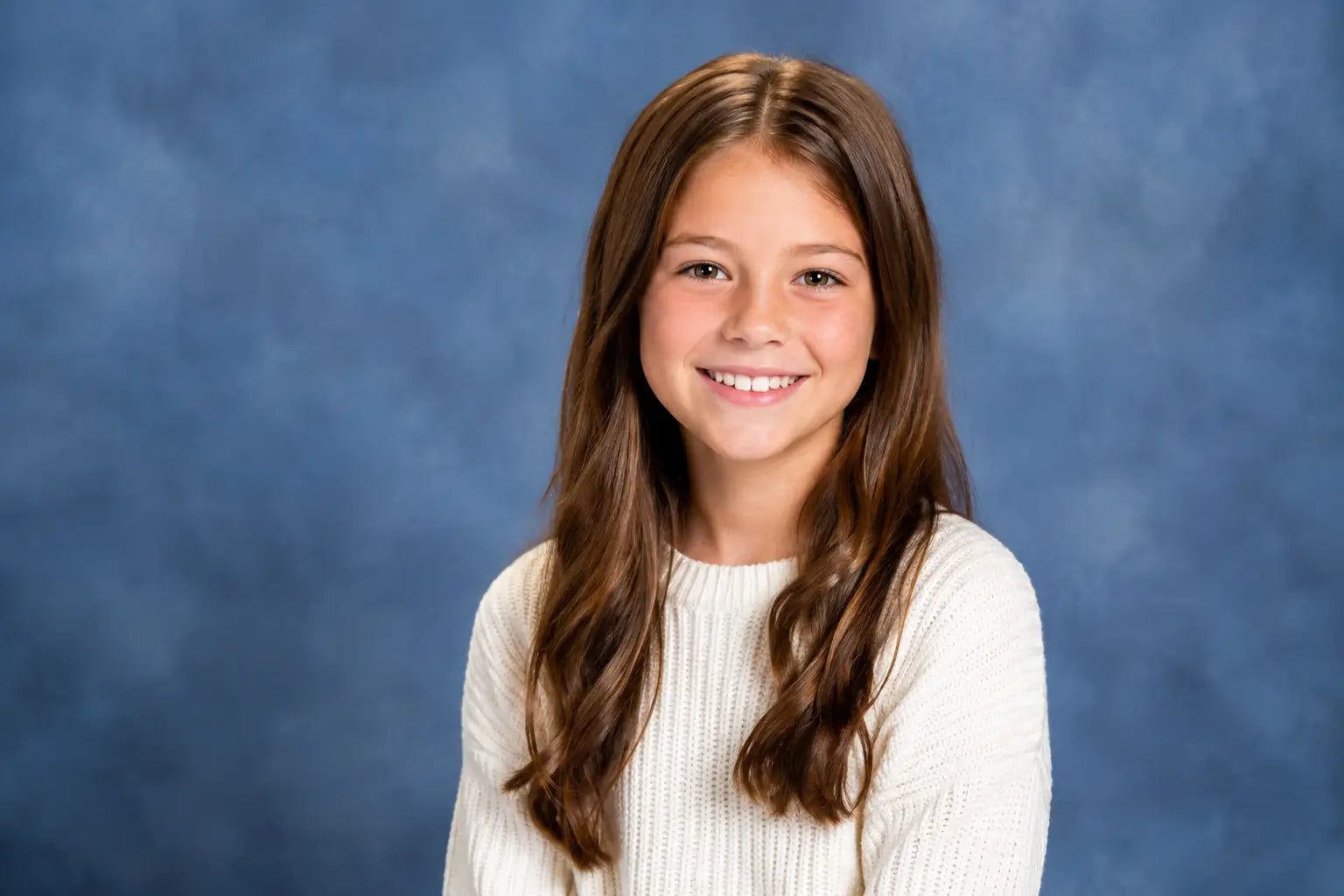
The strongest media day designs use team colors and recognizable brand elements without turning every frame into an advertisement. A clean color field, subtle texture, mascot mark, school name, or repeating logo pattern can establish ownership while keeping attention on the athlete.
For football, baseball, softball, lacrosse, and hockey, darker dramatic backgrounds often work well with uniforms, equipment, and directional lighting. Basketball and volleyball programs may prefer a graphic court-inspired look or a bright, modern color treatment. The right answer depends on uniform color and the intended mood. A black jersey against a deep charcoal design can look powerful, but only if separation lighting or a brighter edge behind the subject prevents the uniform from disappearing into the background.
Avoid placing critical copy directly behind where faces will fall. Names, season slogans, and large logos are most useful when positioned high, low, or off to the side, where they remain readable in a variety of crops. This makes the design more useful for player graphics, posters, roster announcements, and sponsor-ready content.
Material Selection Affects Camera Results
Backdrop material changes setup time, transport requirements, and how the background responds to light. A media day can be held in a controlled studio, a bright gymnasium, a school lobby, or on the edge of a practice field. Each location places different demands on the surface.
Matte, non-reflective materials are especially useful where strobes, LEDs, overhead fixtures, or windows may strike the background at an angle. A smooth, non-reflective finish helps the printed color and graphic detail photograph without glare, reducing bright hotspots that can slow down editing. For a tightly lit portrait station, this is often more valuable than a glossy surface that looks good to the eye but creates reflections in camera.
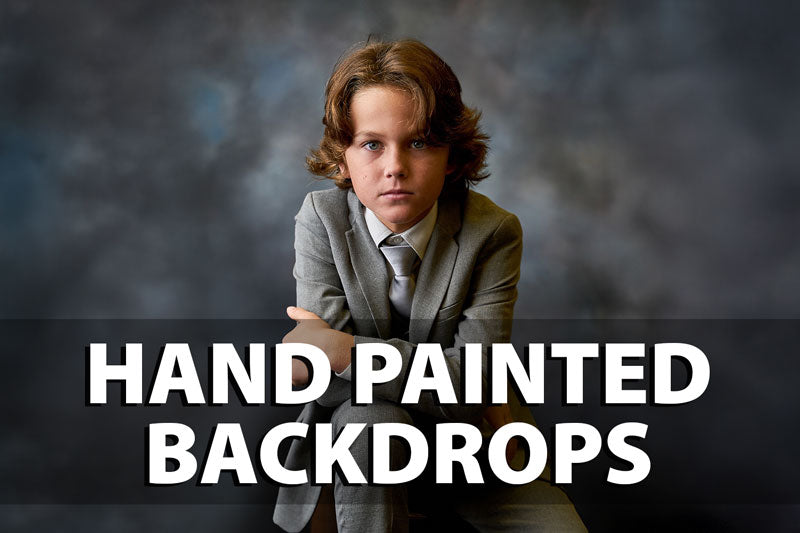
Fabric backgrounds are a practical option when portability and repeat use are priorities. They can be folded for transport and installed on a dependable support system, though they should be stretched or steamed as needed to keep the field clean. Vinyl provides a smooth surface and can be an efficient choice for event displays, especially when the artwork is designed with simple, bold graphics. Canvas and hand-painted options bring more natural texture detail when the team wants a less graphic, more editorial portrait look.
The setting should guide the decision. If the background will be moved between several schools or athletic facilities, manageable weight and fast setup may take precedence. If it will remain in a dedicated studio or athletics department space, a larger material and permanent support solution may offer more production flexibility.
Build a Background That Works Beyond Portraits
Media day imagery rarely stays in one place. The same athlete photograph may be used for roster graphics, social posts, game-day announcements, recruiting materials, programs, posters, banners, and season-end recognition. Background artwork needs enough visual consistency to connect those pieces, while offering enough open space for designers to add text later.
A custom backdrop can incorporate a mascot, team mark, colors, and campaign language in a format built for the photographer’s framing. Denny Manufacturing can produce custom photo backdrops and branded display materials for teams that need a polished visual environment rather than a generic sports pattern. The most effective custom designs are planned around the actual camera position and crops, not simply adapted from a logo file.
Ask where vertical, square, and horizontal images will be used. A design with centered artwork may be ideal for a poster but awkward for vertical phone-first content. Conversely, a side-weighted composition can give social designers room for player names and statistics, but it requires a consistent posing position during the shoot. Planning these details in advance keeps every athlete image usable.
Consider a Step-and-Repeat for Event Coverage
A step-and-repeat background serves a different purpose than a portrait backdrop. Repeating logos, sponsor marks, league identities, and school branding make sense for arrivals, press moments, signing events, booster functions, and team celebrations. It is designed to be read in a wider scene where multiple people may be photographed at once.
For individual media day portraits, a step-and-repeat can work, but it creates a more event-focused look. If the goal is dramatic athlete imagery, a custom portrait background with controlled branding usually delivers more depth and stronger subject emphasis. Some organizations use both: one station for editorial player content and another for sponsor or social coverage.
Set Up for Consistency, Not Just a Good First Frame
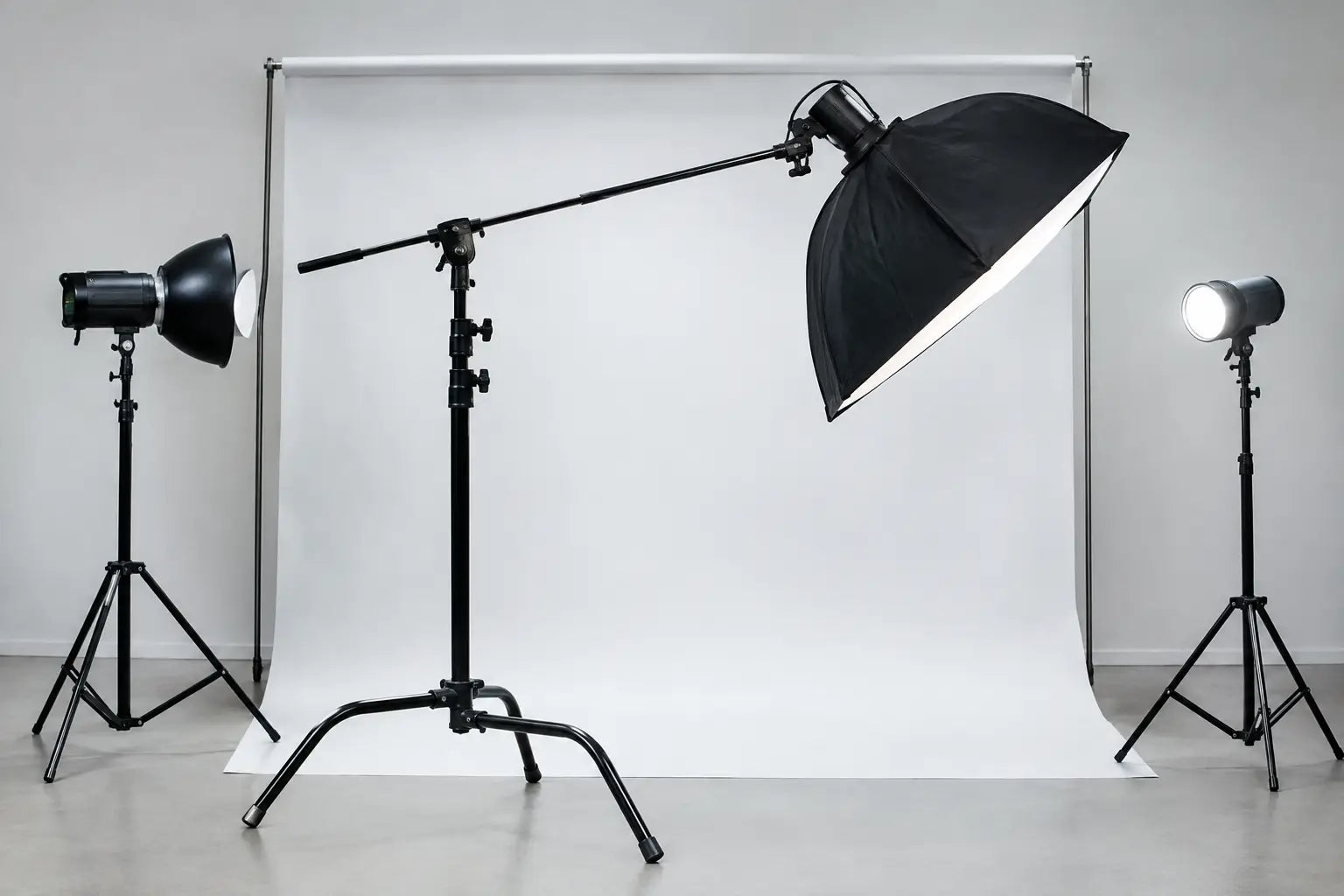
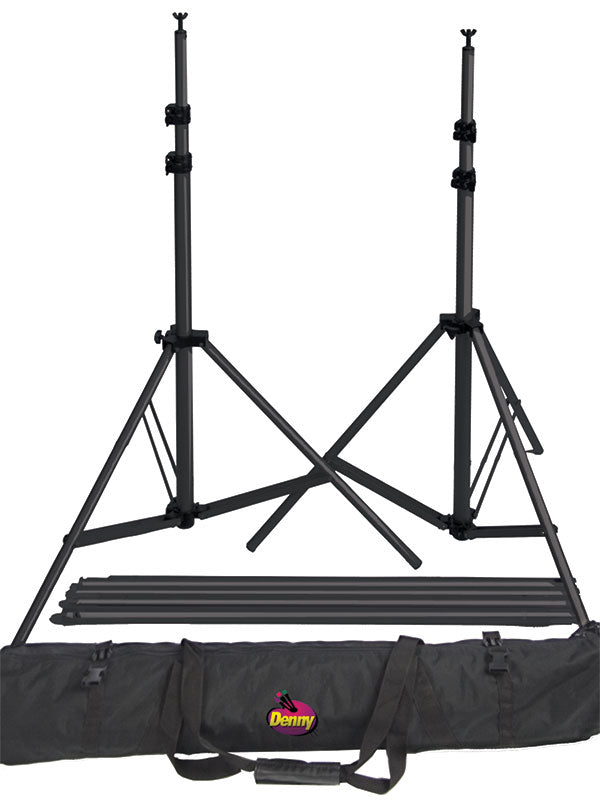
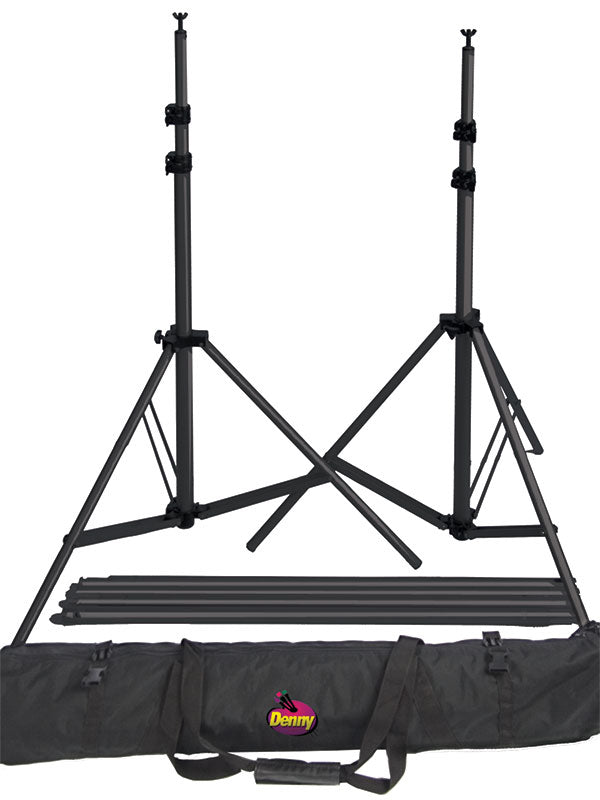
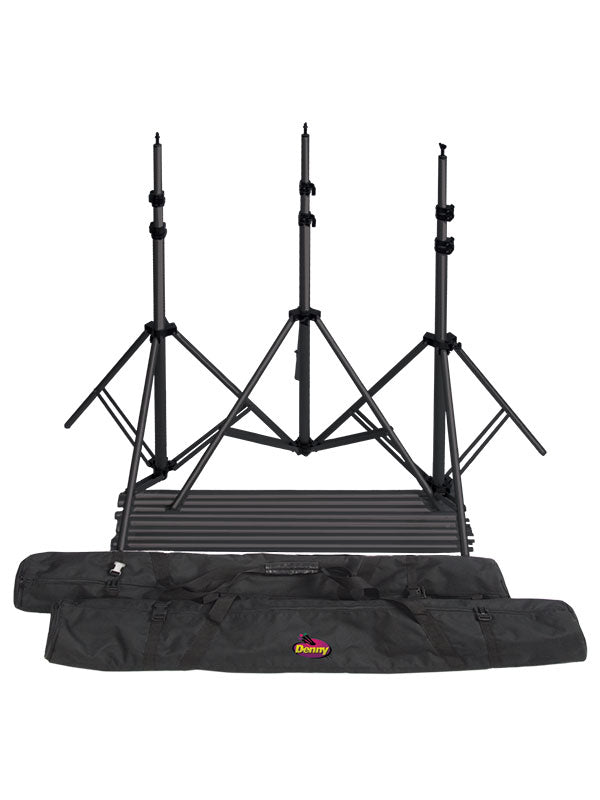
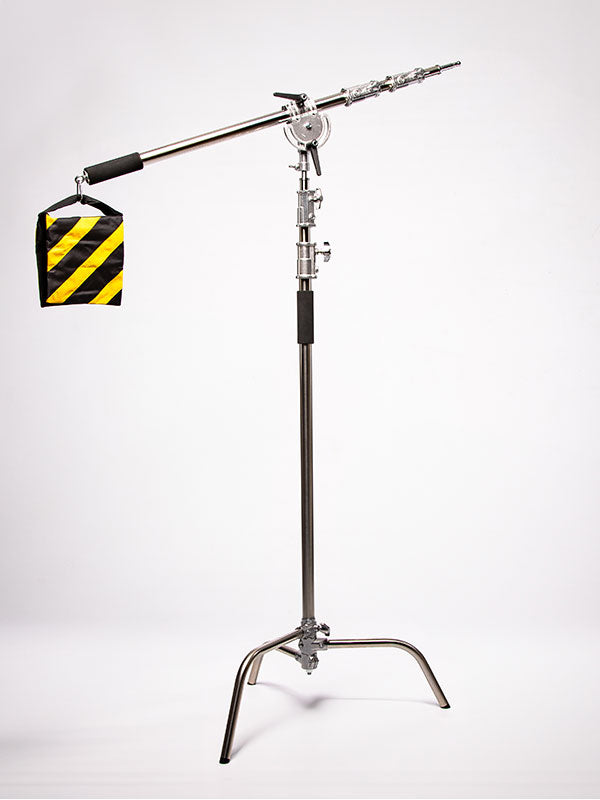
The production problem is not getting one strong portrait. It is getting 75 or 200 strong portraits that match. Secure the backdrop on a support system sized for its width, pull the surface smooth, and establish a fixed standing mark for athletes. The mark should account for focal length, light placement, and the position of key background elements.
Keep the athlete far enough from the background to reduce shadows and preserve separation. The necessary distance depends on lens choice and available room, but even a modest gap helps prevent hard shadows from falling behind the subject. It also makes it easier to light the background independently when a brighter or more saturated result is needed.
Before the line starts moving, photograph a test subject in the lightest and darkest uniform combinations. Check whether white jerseys clip under the key light, whether dark uniforms retain edge detail, and whether reflective helmets or equipment are introducing unwanted highlights. Small adjustments made before the first scheduled athlete arrives can save significant correction later.
For reliable media day operation, keep these four details consistent:
- Camera height, focal length, and shooting position
- Athlete standing mark and preferred pose direction
- Key light output and background light placement
- Background tension, cleanliness, and distance from the subject
Add a Floor Plane When Full-Body Images Matter
A full-length portrait can lose credibility when the athlete appears to stand on an unrelated gym floor, carpet, or bare concrete. Photography flooring or a coordinated floor drop creates a complete visual environment and gives the subject a defined place to stand. A realistic wood, concrete, turf-inspired, brick, or dark textured floor plane can reinforce the style of the background without competing with the uniform.
Choose a floor surface with a non-reflective finish whenever possible. Glossy flooring can mirror lights, shoes, and the lower edge of the backdrop, creating distracting artifacts in camera. A surface that photographs without glare is easier to manage for action poses, seated poses, and equipment shots.
The transition between the vertical background and floor deserves attention. For a clean studio effect, create a gentle curve or use a coordinated system that avoids a hard line behind the athlete. If space does not allow a floor drop, crop for three-quarter portraits rather than forcing full-body images against an unprepared venue floor.
The most useful sports media day background is the one that supports the schedule, flatters every uniform, and gives the organization a consistent visual system long after the last portrait is delivered. Plan the artwork around the camera, choose materials for the location and lighting, and test the complete set before athletes arrive. That preparation gives the photographer a dependable set and gives every player an image that looks ready for game day.