



























A custom photo backdrop should do more than display a logo or fill empty space. It needs to photograph cleanly under your lighting, fit the shooting distance available, support the purpose of the session, and hold up through repeated setup. For portrait studios, schools, event teams, and commercial clients, custom photo backdrops turn a planned visual concept into a dependable working set.
The best result begins with a practical question: what must this backdrop do in the final image? A branded step-and-repeat at a gala has different requirements than a painted scene for a children’s portrait set or a wide environmental print used behind a product launch. Choosing the image, material, finish, and size as one system prevents common problems such as visible glare, soft logos, awkward cropping, or a backdrop that is too narrow for group photographs.
Start With the Photograph You Need to Make
Before approving artwork, define the camera framing, subject count, and intended use. A backdrop for headshots may only need to cover a narrow vertical frame. A family session, team portrait, or school photo station needs room for people to shift position without falling outside the printed area. If the backdrop will be used for video as well as still photography, allow extra width for movement and wider camera angles.
Also consider where the visual information needs to sit. Logos, text, faces, and important design details should remain in the camera frame after you account for standing subjects, furniture, props, and the floor line. Event backdrops often fail because branding is placed at chest height, where it is blocked by guests. A repeat pattern with logos distributed across the full usable area is usually more dependable for red-carpet and sponsor photography.
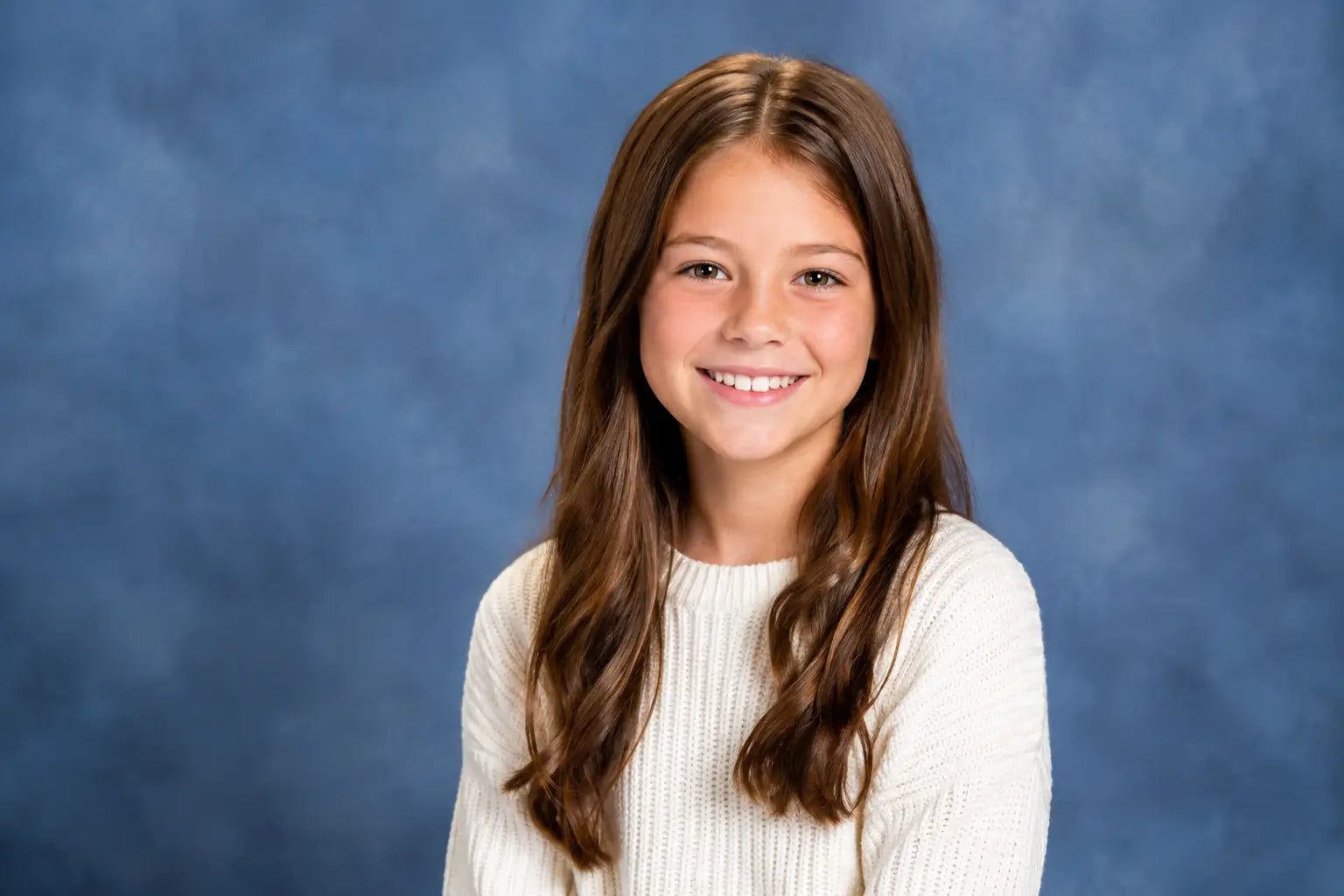
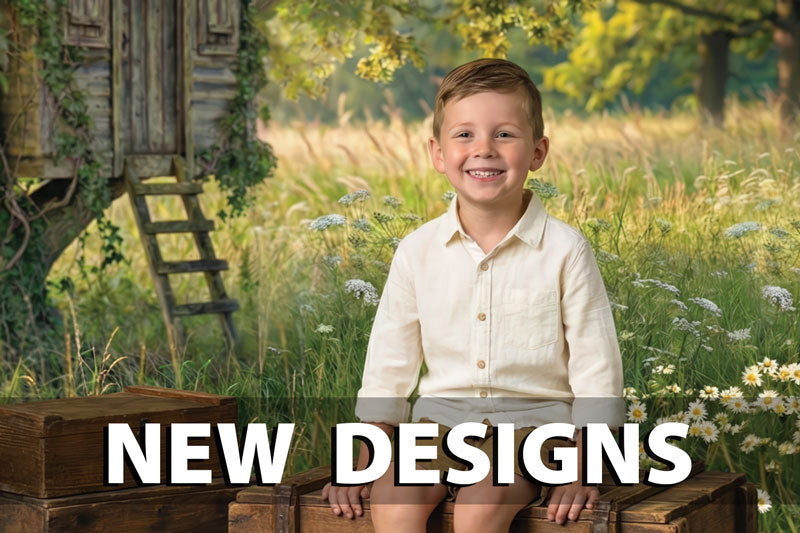
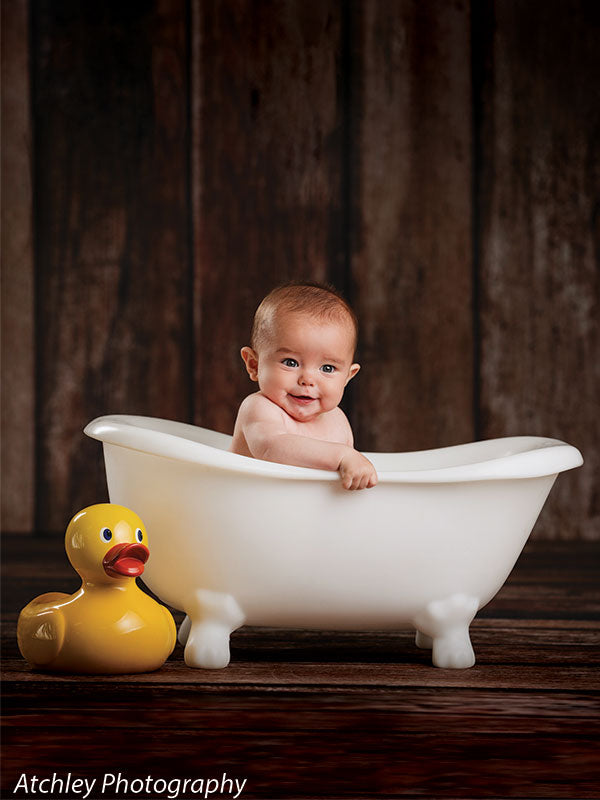
For portrait work, the artwork should support the subject rather than compete with them. A custom scenic print can establish the season, location, or brand mood, but excessive detail may pull attention away from faces. Natural texture detail, controlled contrast, and clear separation between foreground and background generally photograph better than a busy pattern with no quiet areas.
Build for the real crop, not the full backdrop
A camera rarely uses the entire backdrop. Portrait photographers crop for head-and-shoulders, three-quarter, seated, and full-length compositions. Design with a safe area in the center, then extend color and pattern beyond the expected crop. This gives you flexibility when clients bring an extra family member, a large product, or a prop that changes the composition.
If a backdrop includes a horizon, architectural line, or printed floor transition, confirm its height in relation to your typical subject. A low horizon can work well for standing portraits; a line at shoulder or neck level can be distracting. Small proofing decisions like this save significant retouching later.
Choose a Custom Photo Backdrop Material by Use
Material affects color reproduction, texture, portability, durability, and how the surface responds to light. There is no single best option for every assignment. The right choice depends on whether the backdrop will live in a studio, travel to events, hang from a support system, or work with a matching floor drop.
Printed vinyl is a practical option when you need a smooth, non-reflective finish that photographs true without glare. It is especially useful for high-detail designs, branded graphics, and realistic surfaces such as wood, tile, brick, or concrete. A quality matte surface reduces hot spots and keeps printed color consistent under controlled studio lighting.
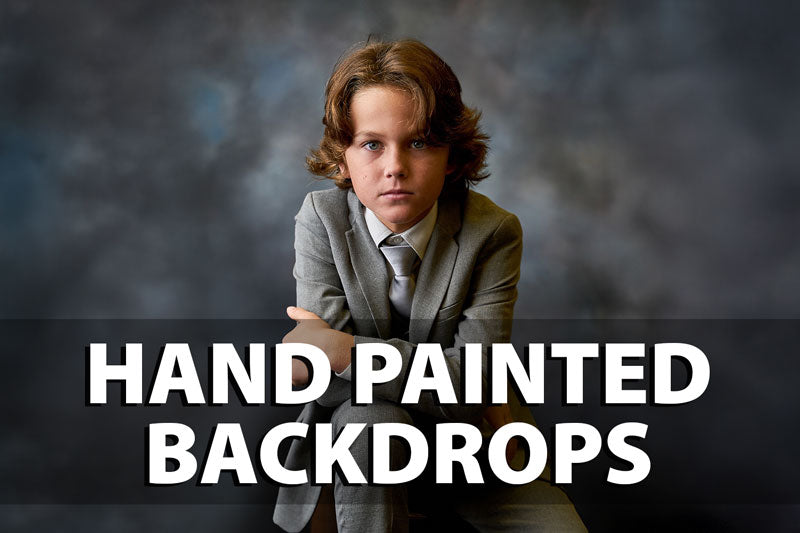
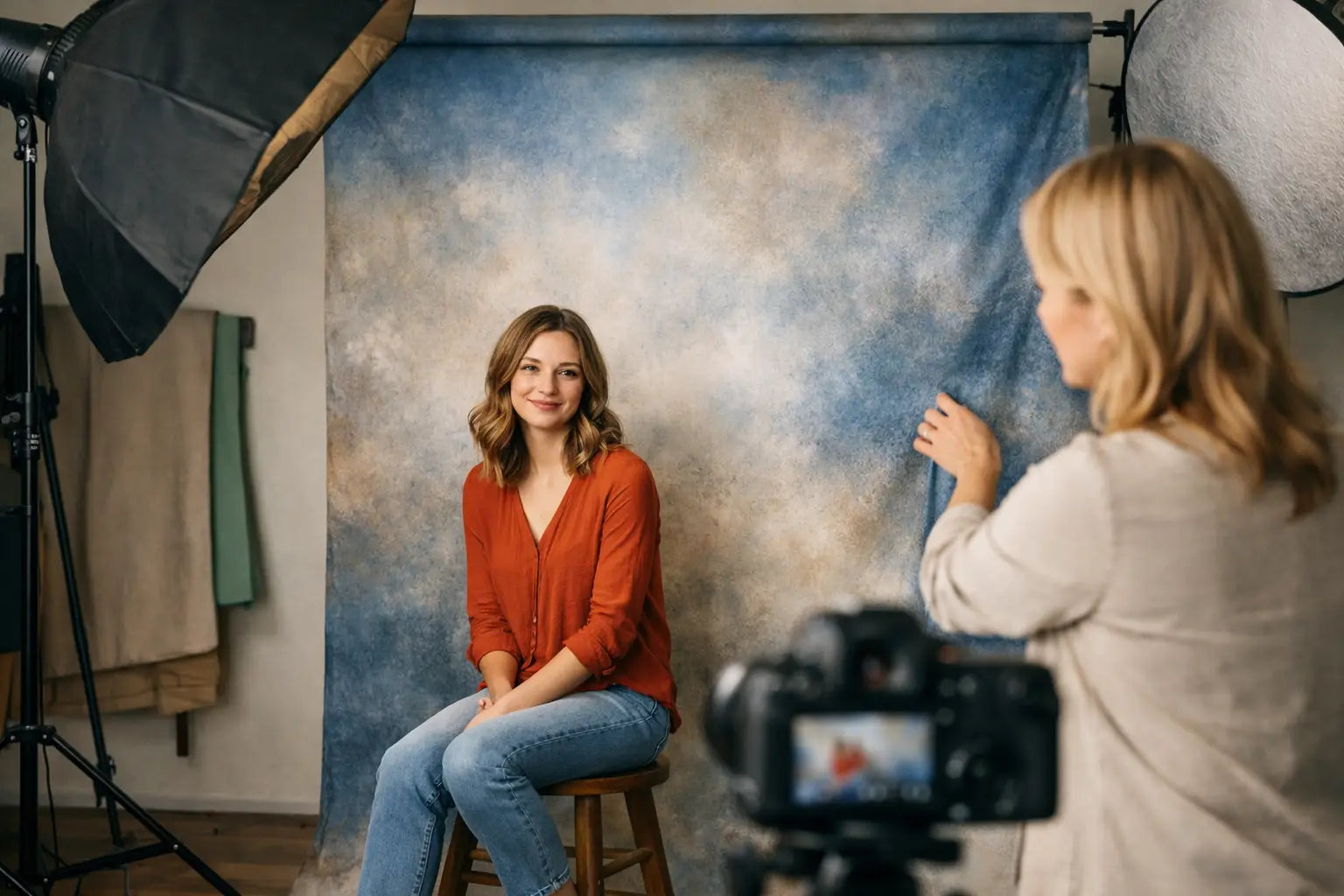
Canvas and cloth backdrops bring a more tactile, photographic character to portrait work. They can be a strong choice when the desired look calls for visible texture, painterly depth, or a softer transition behind the subject. Hand-painted options suit studios that want one-of-a-kind color movement and subtle variation rather than a strictly graphic design.
Muslin remains useful for lightweight, classic studio setups, particularly when a soft drape or traditional portrait appearance is part of the concept. Paper provides a clean, economical surface for temporary sets and simple color-driven work, although it is less forgiving when shoes, props, or frequent handling are involved. Collapsible formats make sense when space and travel speed matter most, but they are best suited to tighter framing rather than large groups.
For many studios, the strongest set includes both a wall backdrop and a coordinated floor. A printed floor drop with a non-reflective surface can create a believable plane under the subject, reducing the need to build a physical set for every session. Matching the perspective, color temperature, and texture of the floor to the background is what makes the scene feel intentional in camera.
Size, Support, and Setup Are Part of the Purchase
A visually strong backdrop can still create a frustrating workday if it does not fit the available support equipment. Measure the clear width and ceiling height of the shooting area, then account for the distance between subject, backdrop, and camera. Pulling a backdrop too close to the subject can increase shadows and limit the depth needed for flattering lighting.
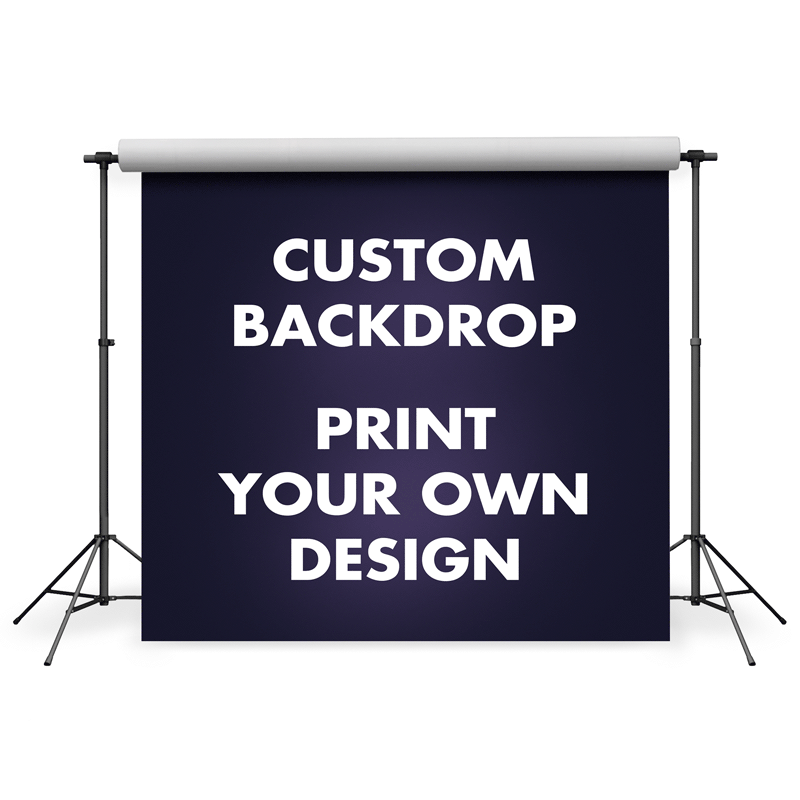
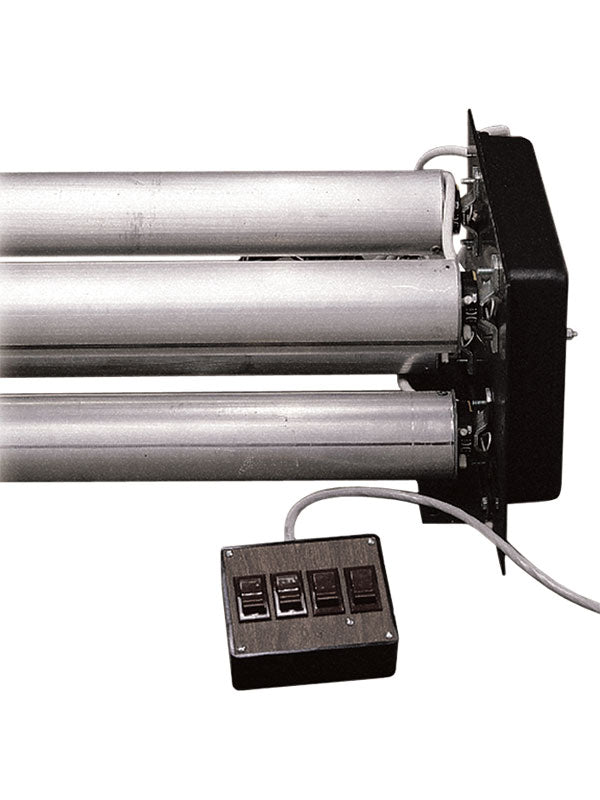
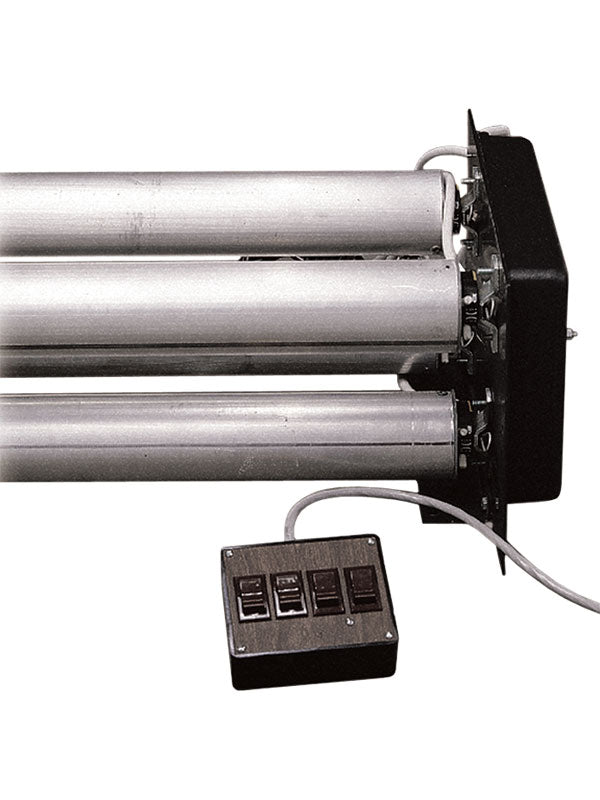
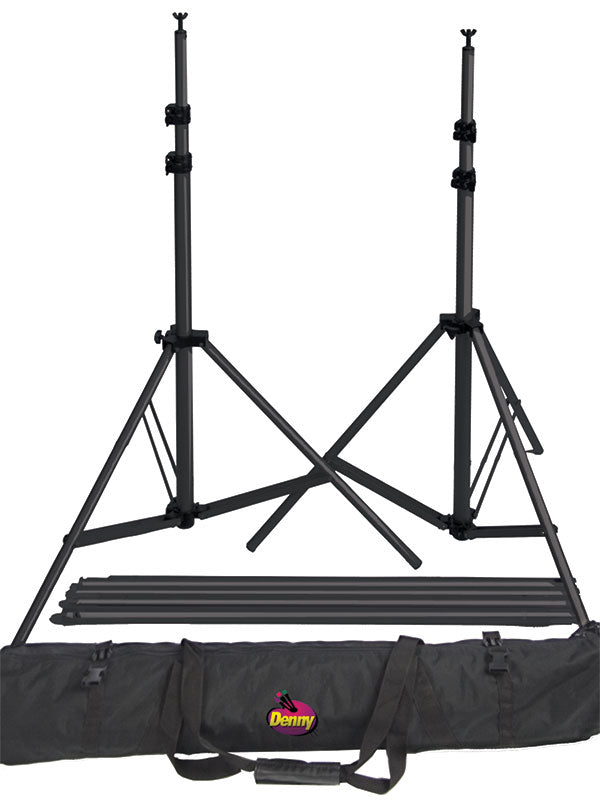
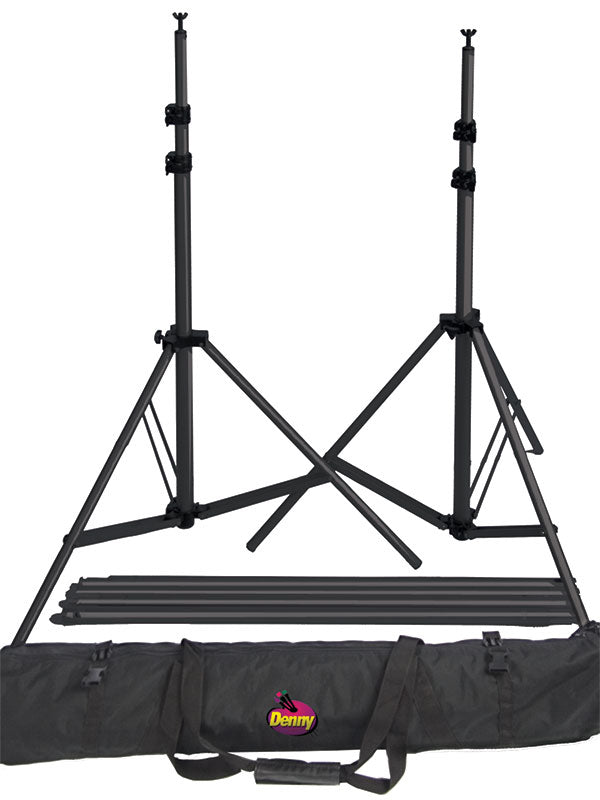
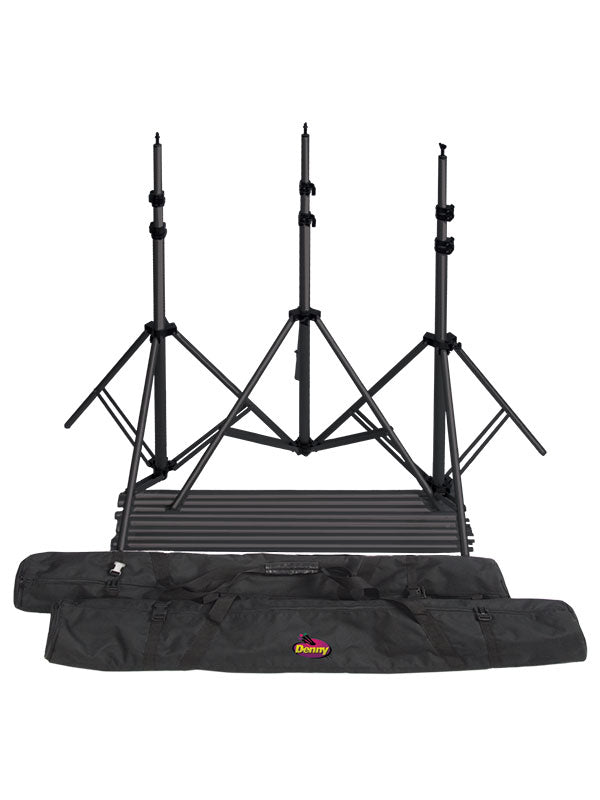
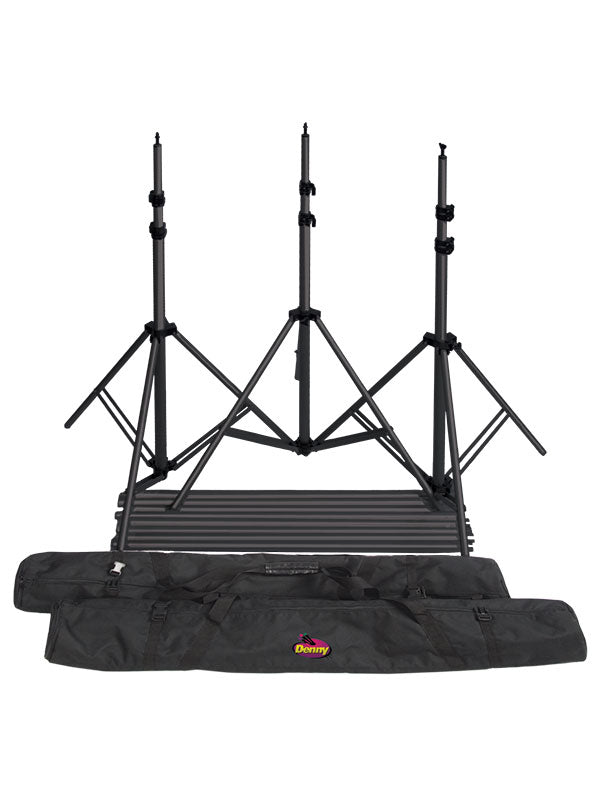
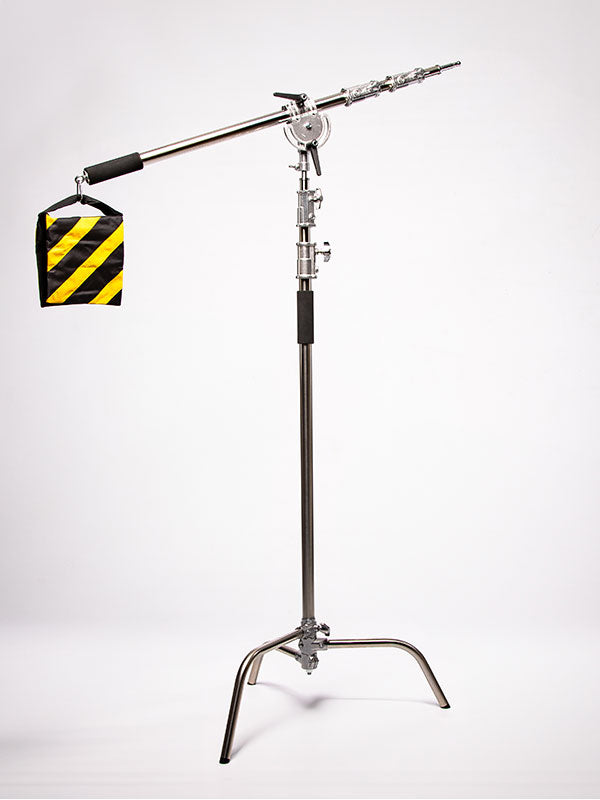
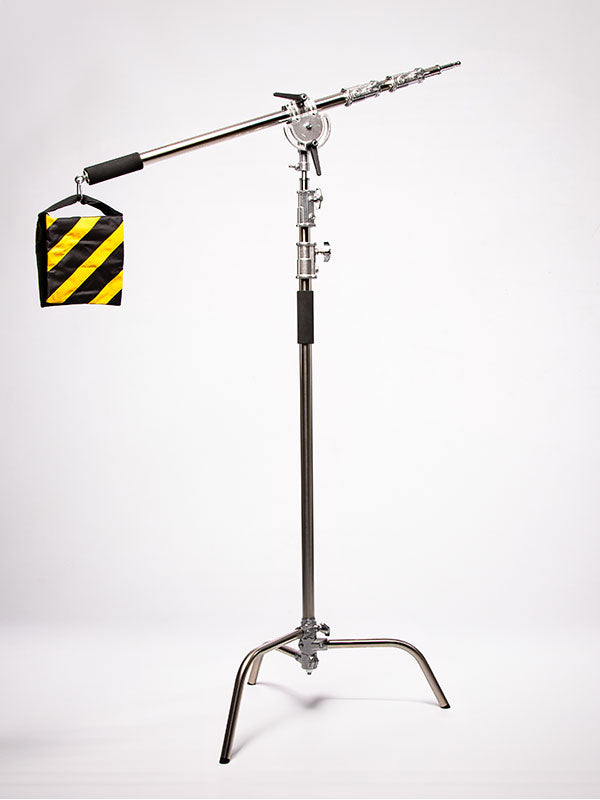
Wide custom backdrops need dependable support. A professional backdrop stand, crossbar system, roller system, or wall-mounted solution should match the weight and width of the material. For event displays, use hardware that keeps the graphic smooth and stable when guests gather nearby. A loose or sagging surface is visible in photographs and makes a polished design look less finished.
Travel introduces another set of trade-offs. A lightweight backdrop may be easier to transport and set up alone, while a heavier material may provide a flatter, more durable presentation over repeated use. Consider storage, vehicle space, venue access, and how quickly the display must be assembled. For recurring school, sports, holiday, church, or corporate events, consistent setup can matter as much as the initial visual impact.
Plan lighting around the surface
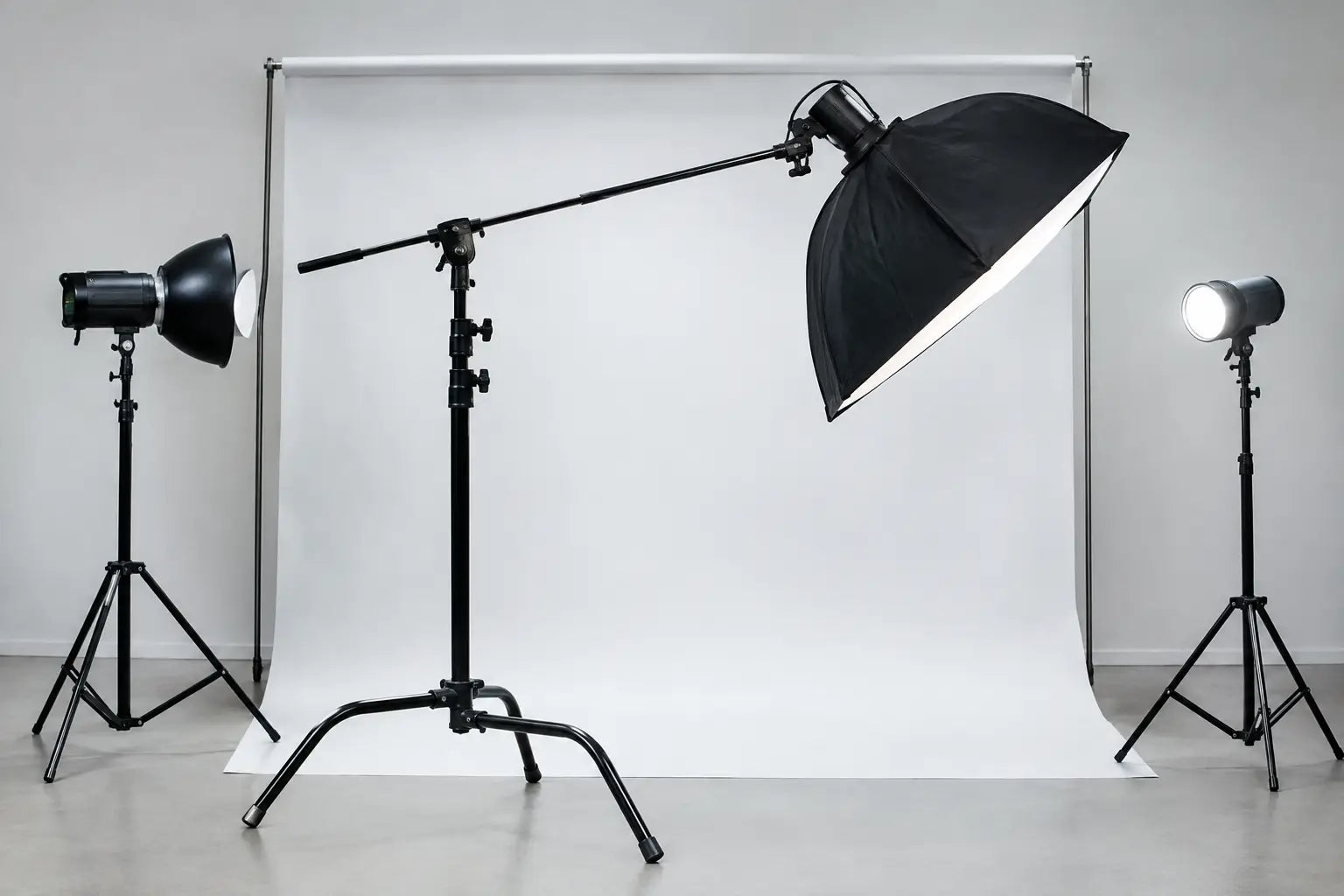
Even matte materials benefit from intentional lighting. Place the backdrop far enough behind the subject to control spill and reduce hard shadows. Use separate background lights when you need a clean, even exposure across a large printed field, especially for step-and-repeat designs where every logo should remain visible.
Avoid over-lighting a detailed scenic backdrop. The goal is to preserve the printed texture and color without making it brighter than the subject. For commercial photography, test a sample or proof under the actual modifiers and camera settings whenever color matching is critical.
Prepare Artwork That Prints Cleanly
Custom production works best when artwork is created at an appropriate size and resolution from the beginning. Low-resolution files, screenshots, and logos copied from a website may look acceptable on a monitor but become soft or pixelated at backdrop scale. Use original vector logos whenever possible, and provide high-resolution images for photographs or illustrated graphics.
Keep type large enough to read at the expected shooting distance. Fine lines, thin fonts, and small text can disappear in a wide event image. If sponsors require exact logo placement, provide a clear layout and leave enough open space around each mark so the pattern remains legible behind people.
Color deserves the same attention. Screen color is not a final print standard, and ambient venue lighting can shift the appearance of any backdrop. When a brand color must match existing signage, uniforms, packaging, or a campaign, communicate that requirement before production. A proofing process is worth the time for major installations, recurring programs, or commercial work where consistency matters.
Denny Manufacturing can help customers move from an idea or supplied artwork to a purpose-built display, whether the need is a studio environment, custom banner, or step-and-repeat backdrop. Having the material, finished size, support method, and photographic use defined before production keeps that process efficient.
Design for Repeat Use, Not One Good Image
A custom backdrop is often used beyond its original assignment. A school may reuse it for portraits, awards, fundraising events, and social content. A studio may rotate the same branded wall for minis, client meetings, and behind-the-scenes video. Build a design that has enough specificity to feel custom, but enough flexibility to remain useful after one campaign ends.
Store it according to the material’s needs, keep the surface clean, and use protective handling during transport. If the backdrop is part of a larger set, label the matching floor, support hardware, and lighting notes together. That preparation makes recurring setups faster and helps every session start with the same polished foundation.
The most useful custom backdrop is the one that lets you walk into a session knowing the set will fit, photograph cleanly, and give your client a finished result they are proud to share.