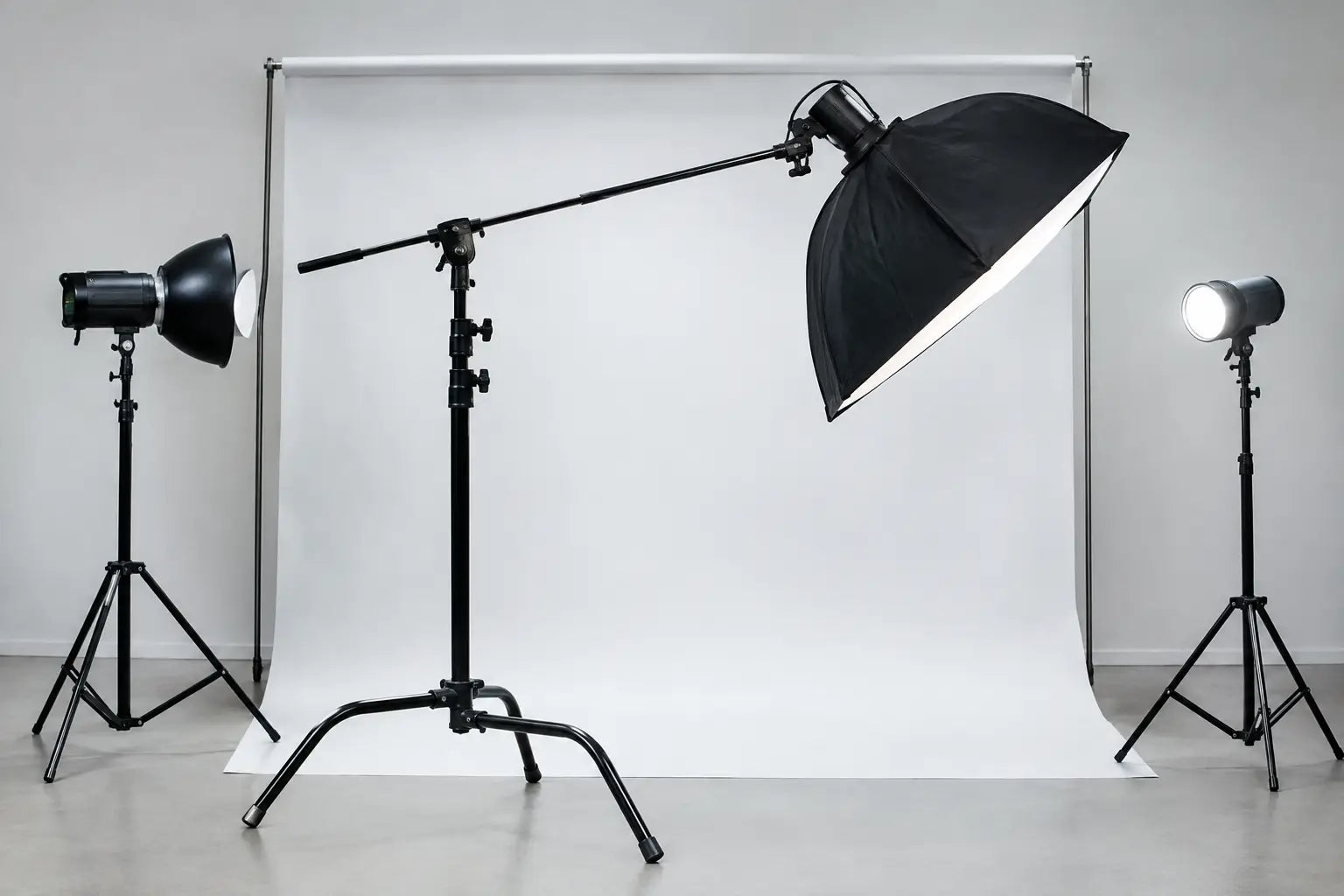


























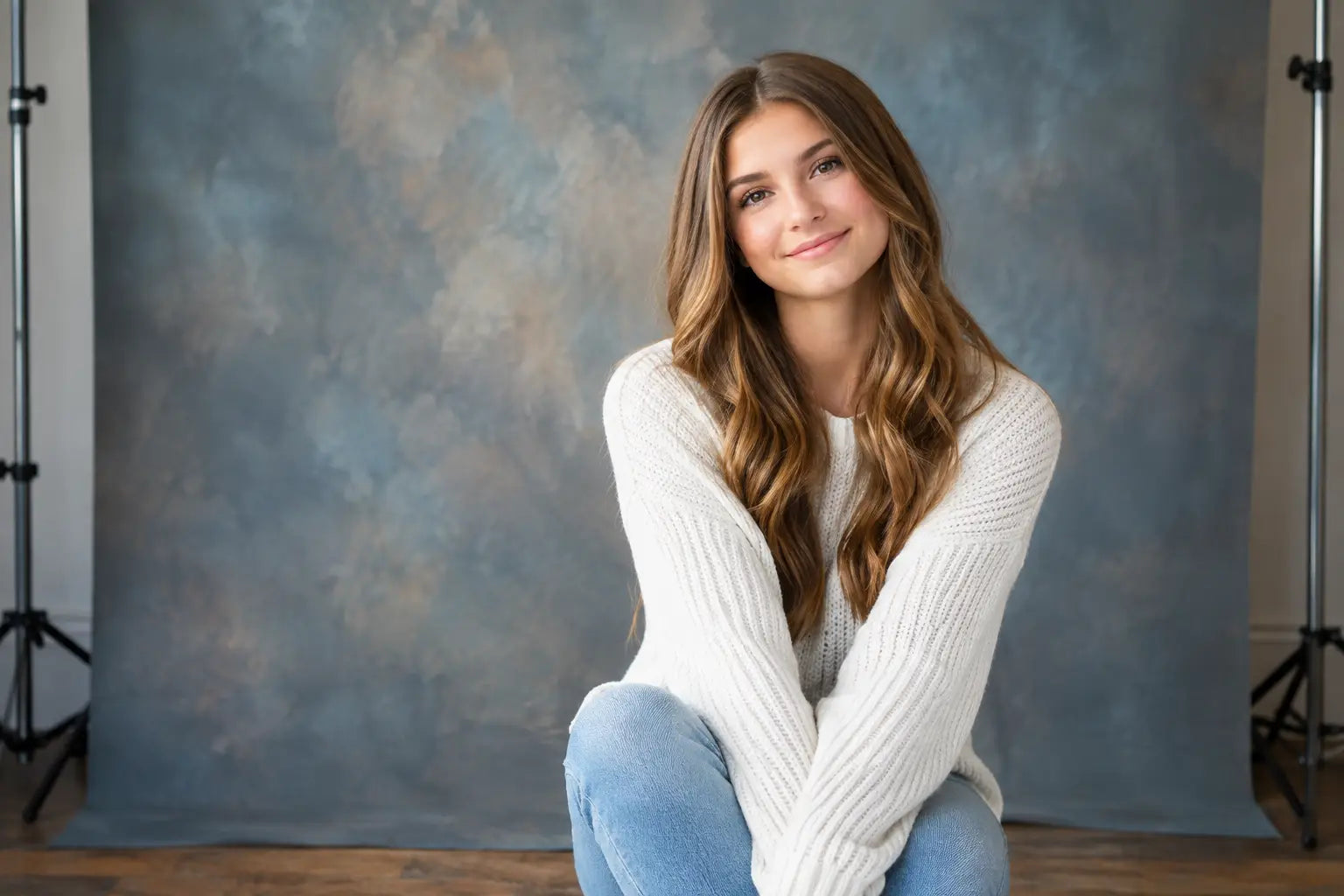

Senior portrait backdrop ideas should do more than fill empty space behind the subject. The right background gives each senior a setting that feels intentional, supports their wardrobe and personality, and keeps attention on the face. For working portrait photographers, it also needs to photograph true under controlled light, set up efficiently, and offer enough range to keep a full senior season from looking repetitive.
A successful senior set usually has three visual layers: the background, the floor plane, and the subject’s styling. Treat those components as a coordinated system. A convincing floor drop can make a printed wall feel like a complete room, while a smooth, non-reflective backdrop helps preserve clean skin tones and keeps retouching focused on the portrait rather than glare or distracting texture.
Senior Portrait Backdrop Ideas by Session Style
1. Warm neutral studio walls
Warm gray, beige, taupe, and soft cream backdrops are dependable foundations for senior work. They support denim, black, jewel tones, white shirts, floral dresses, and layered fall looks without fighting for attention. A lightly textured plaster, painted-wall, or mottled canvas look adds visual depth while remaining subtle at wider apertures.
Use this setup when the client wants images that will hold up well in albums, graduation announcements, and framed wall art. Keep the floor in the same temperature family, such as weathered wood or neutral concrete, so the horizon line feels natural rather than assembled.
2. Dark charcoal or black for a graphic look
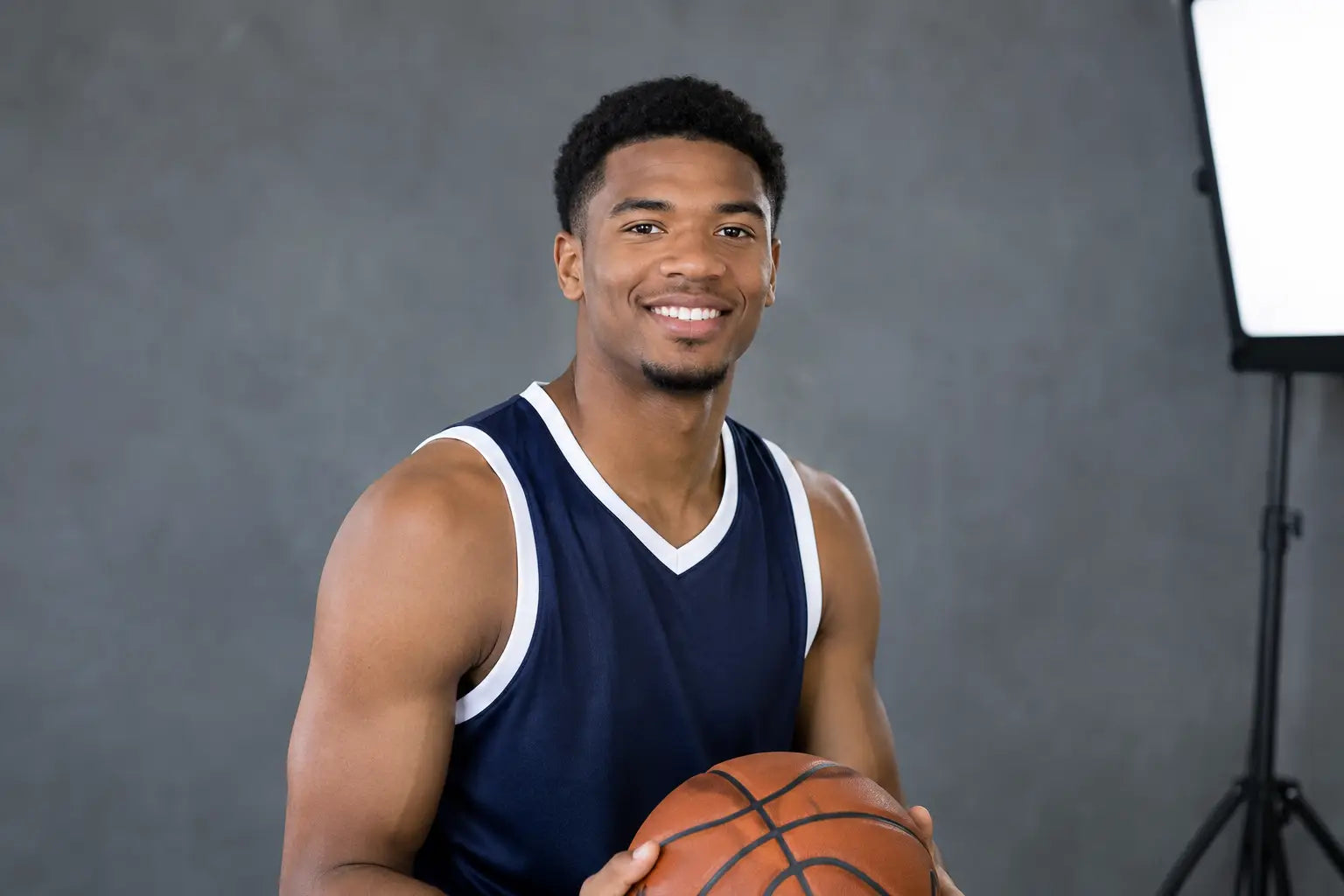
A charcoal, black, or deep graphite background delivers contrast and a more editorial result. It works particularly well for athletes, musicians, dancers, and seniors wearing strong colors or formal clothing. The key is separation: dark hair and dark wardrobe need rim light, edge light, or careful subject-to-background distance to avoid losing shape.
Choose a matte surface that photographs without glare. A dark background can reveal shiny hot spots quickly, especially with broad soft light placed too close to the backdrop. Control the spill, expose for the face, and let the background remain rich rather than lifting it into muddy gray.
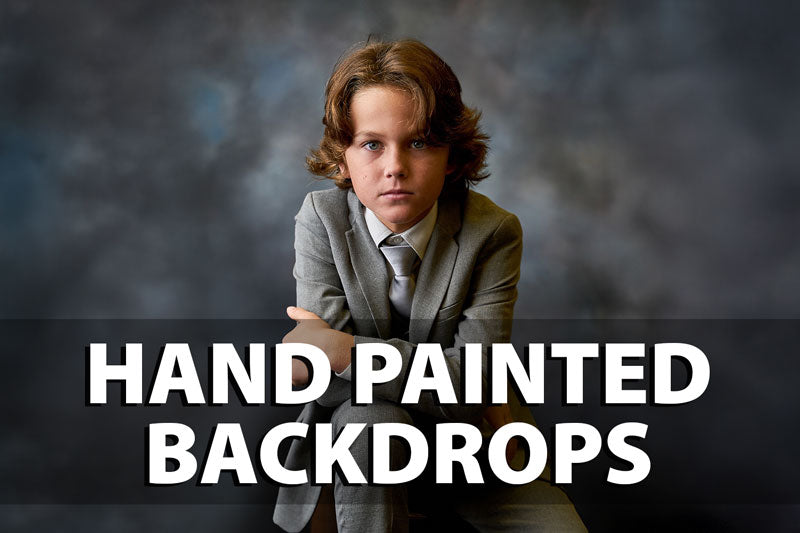
3. Classic painted canvas texture
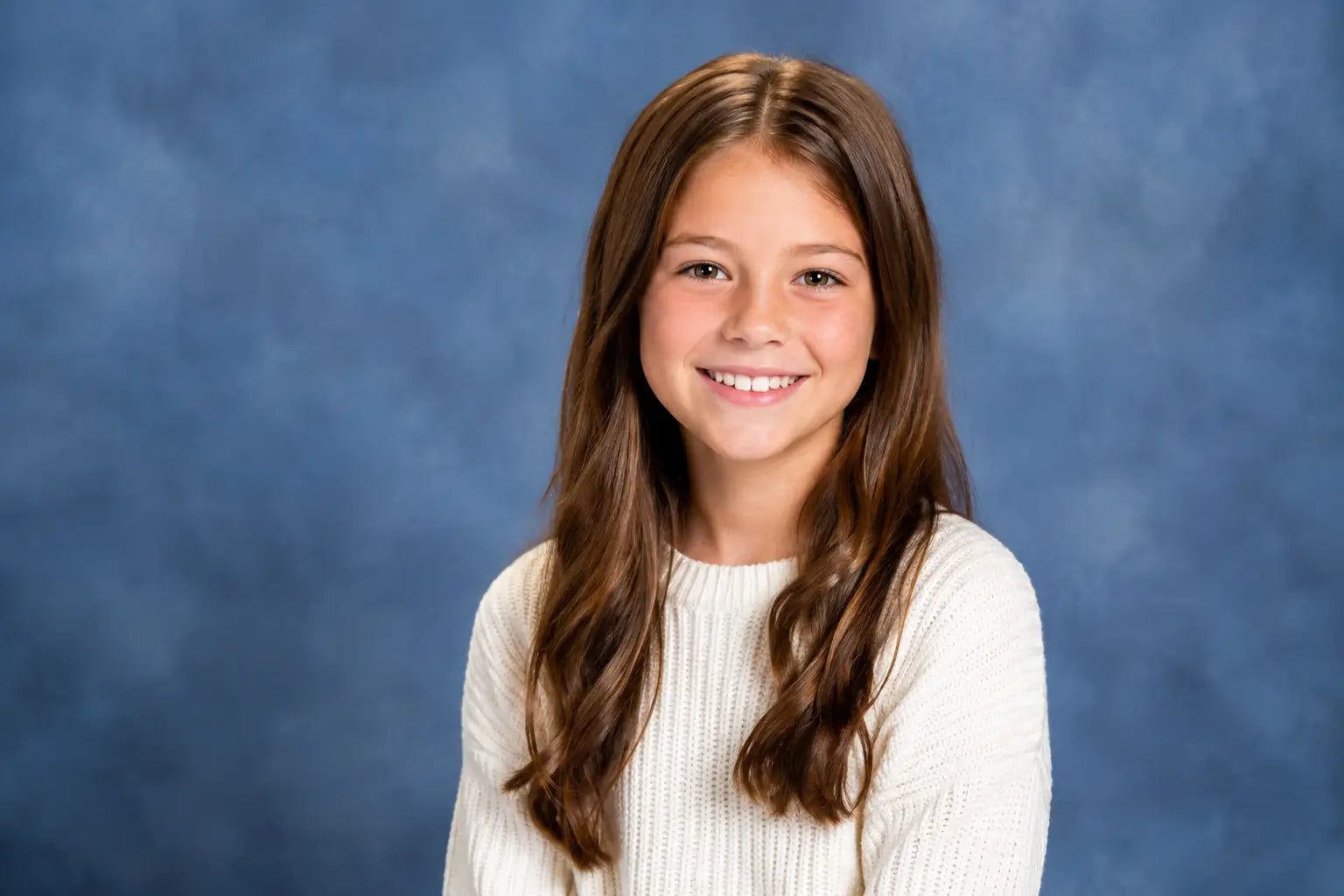
Hand-painted canvas backgrounds remain a strong choice when you want a portrait with dimension but no obvious location. Soft brushwork, layered color, and controlled vignetting provide a finished studio appearance that is difficult to duplicate with a flat solid color. They are especially useful for formal senior portraits, parent-preferred selections, and school yearbook-adjacent work.
A midtone blue-gray, brown-gray, or muted green canvas gives you flexibility across wardrobe changes. Since the texture is built into the material, it reads naturally in camera and requires less effort than adding digital texture later.
4. Brick walls with a believable floor plane
Brick is a familiar senior portrait setting, but it works best when the wall and floor agree. Pair a brick background with a coordinating concrete, weathered wood, or industrial floor drop. That extra plane grounds the subject, supports seated poses, and removes the floating effect that can happen when a portrait ends at a plain sweep.
Look for realistic texture detail with a non-reflective finish. The goal is not to make the viewer study the brick. The goal is to create enough environmental context that the senior looks naturally placed within the scene.
5. Urban concrete for modern styling
Concrete backgrounds suit seniors who want a clean, current, slightly industrial look. Light concrete keeps the set open and works with casual outfits, while darker concrete gives a more dramatic result for fashion-forward clothing and sports portraits. It also offers a practical neutral for photographers who photograph many different personalities in one day.
Concrete needs soft, directional lighting rather than flat illumination. Bring a large source slightly to one side, allowing the texture to retain gentle shadow variation. The backdrop should look dimensional, not like a uniformly lit gray panel.
6. Weathered wood for relaxed portraits
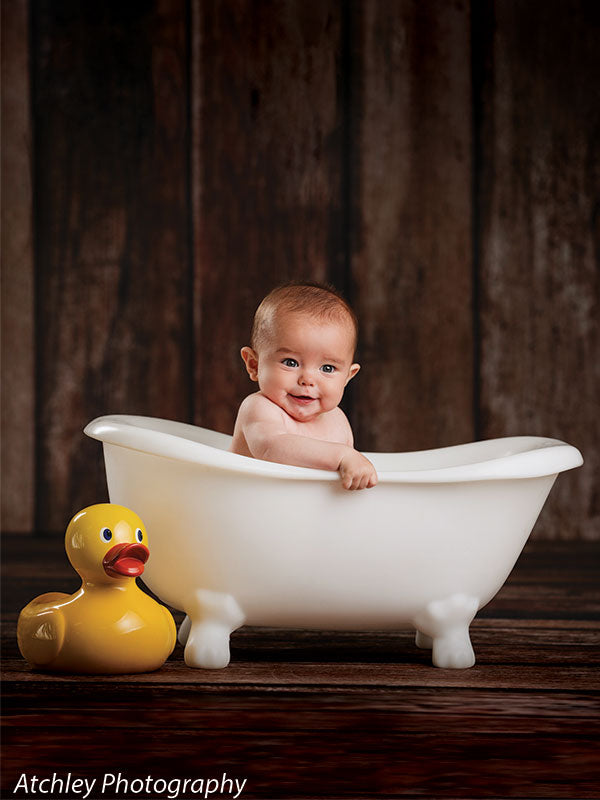
Wood backdrops can shift from rustic to polished depending on the finish. Whitewashed boards feel bright and approachable. Medium barn wood adds warmth and works well with boots, denim, flannel, and late-summer styling. Darker reclaimed wood can feel more mature when balanced with clean wardrobe choices and controlled light.
When using a wood wall, include matching or compatible flooring whenever the composition shows below the knees. A realistic wood floor drop makes standing, sitting, and leaning poses more convincing while keeping the set portable and consistent.
7. Botanical and greenhouse-inspired scenes
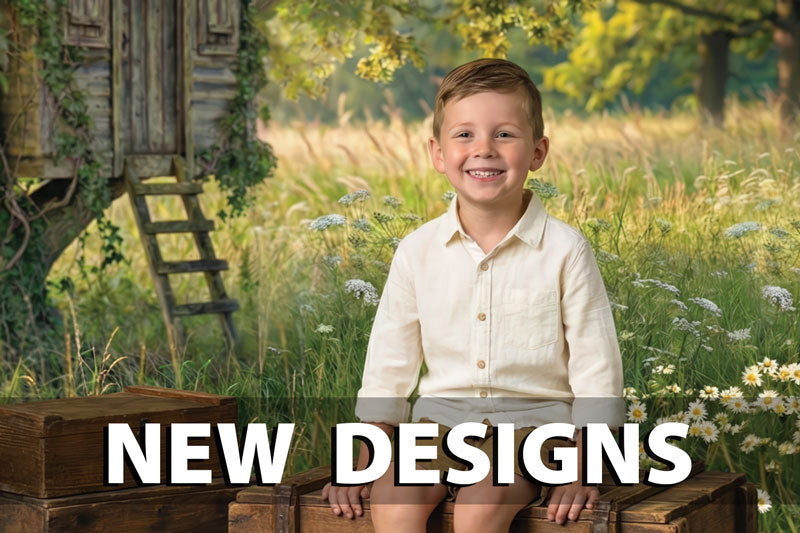
A botanical wall, subtle greenery, or greenhouse-style scene is useful when clients want an outdoor feeling without relying on weather or seasonal conditions. Keep the foliage believable and restrained. Large, sharply detailed leaves directly behind the face can pull focus and complicate hair edges.
This approach is strongest for soft fashion, floral dresses, natural makeup, and lifestyle senior sessions. Position the subject several feet forward when possible, then use aperture and lighting to separate them from the scene. The result should feel airy and layered, not flat.
8. Clean white for high-key versatility
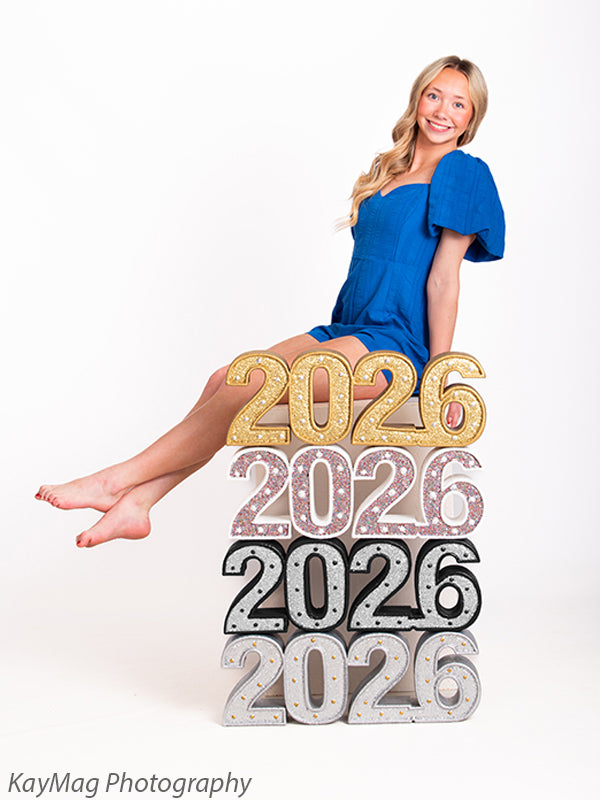
White is not a single look. A bright white vinyl, paper, cloth, or collapsible surface can produce crisp high-key portraits, but it requires enough light to render cleanly without washing out the subject. It also reveals footwear marks, wrinkles, and floor seams more readily than darker materials.
For full-length work, use a white floor surface designed to photograph smoothly and control reflections. For headshots and waist-up portraits, a white background can be one of the fastest wardrobe-change solutions in the studio. It keeps attention on expression and gives clients a modern, uncomplicated option.
9. Saturated color for personality-driven sessions
Muted color is safe, but a bold backdrop can become the reason a senior chooses your studio. Deep blue, burgundy, emerald, mustard, and dusty rose can all work when selected around the client’s clothing and intended use. The backdrop should complement the wardrobe, not closely match it.
Test color under your actual lighting before the session. Some materials and pigments shift cooler or warmer depending on the source, while highly saturated backgrounds can bounce color onto pale clothing and skin. A little distance between subject and background helps control that contamination.
10. Sports-focused environments
Sports portraits benefit from a set with visual direction. A dark textured wall, stadium-inspired background, locker-room look, or dramatic concrete scene can support uniforms, equipment, and team colors without requiring a crowded location. Use the floor plane for balls, bats, helmets, or a seated pose, but keep props purposeful.
A wider backdrop and secure support system matter here. Sports portraits often involve movement, oversized equipment, and multiple pose changes. Build enough room for the athlete to step away from the background, then light the subject separately for depth and definition.
11. Fine art florals and painted scenes
For seniors who want a more refined portrait, a painted floral or soft scenic background can offer an elevated alternative to a literal location. These backdrops work well with formal dresses, dance attire, and milestone images intended for heirloom prints. The trade-off is specificity: a strong floral scene may not serve every wardrobe in the same session.
Use these sets as a signature look rather than the only option. A neutral companion backdrop gives the gallery balance and provides families with a classic portrait choice alongside the more stylized images.
12. Custom backdrops for a recognizable studio look
A custom-produced backdrop can be worthwhile when your senior brand relies on a distinct wall color, architectural scene, school identity, or repeatable seasonal concept. It creates consistency across marketing images and can reduce the time spent searching for locations that match your visual direction.
Plan the design around how you actually photograph. Consider full-length versus headshot framing, where feet will land, whether clients will lean or sit, and how much negative space you need around the head and shoulders. Denny Manufacturing can produce custom visual environments when a standard background does not fit the session concept.
Build Backdrop Variety Without Slowing the Session
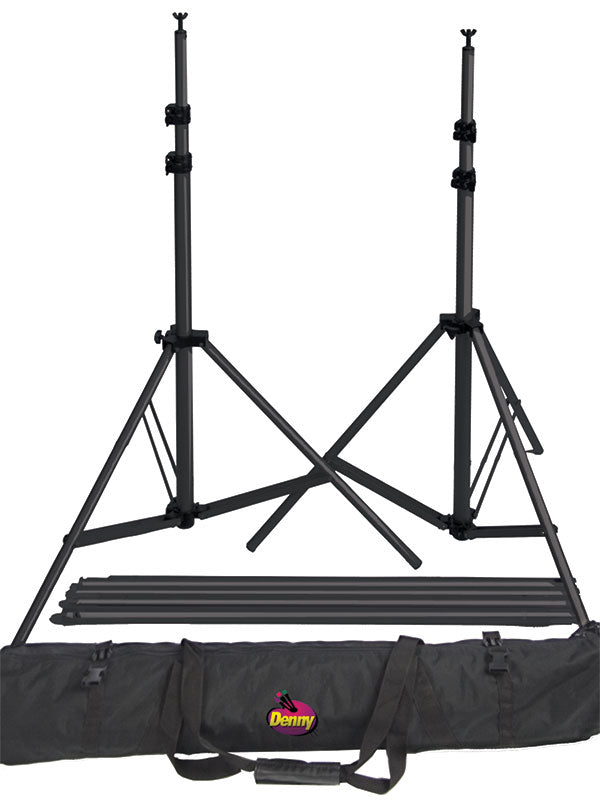
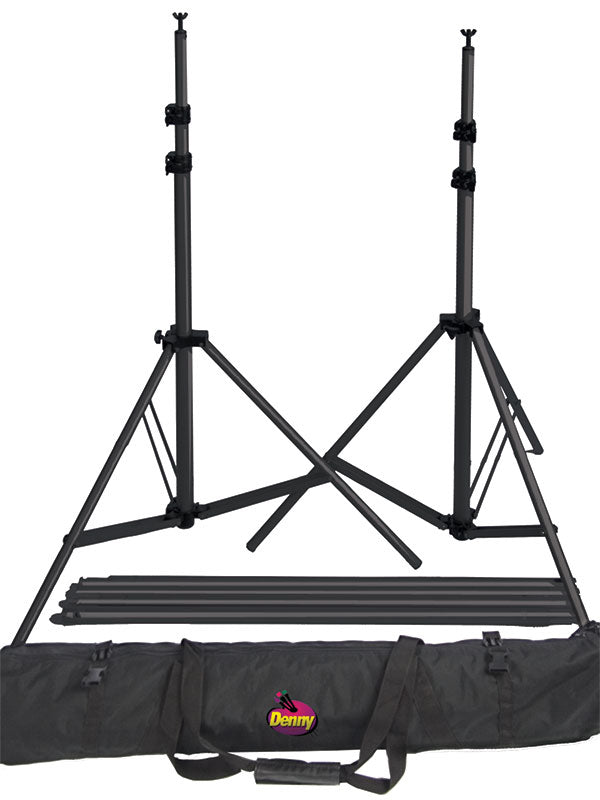
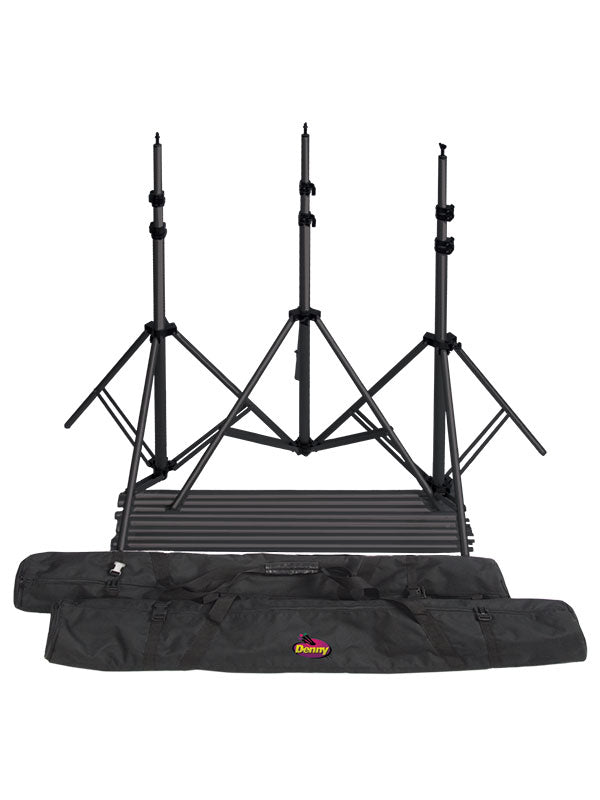
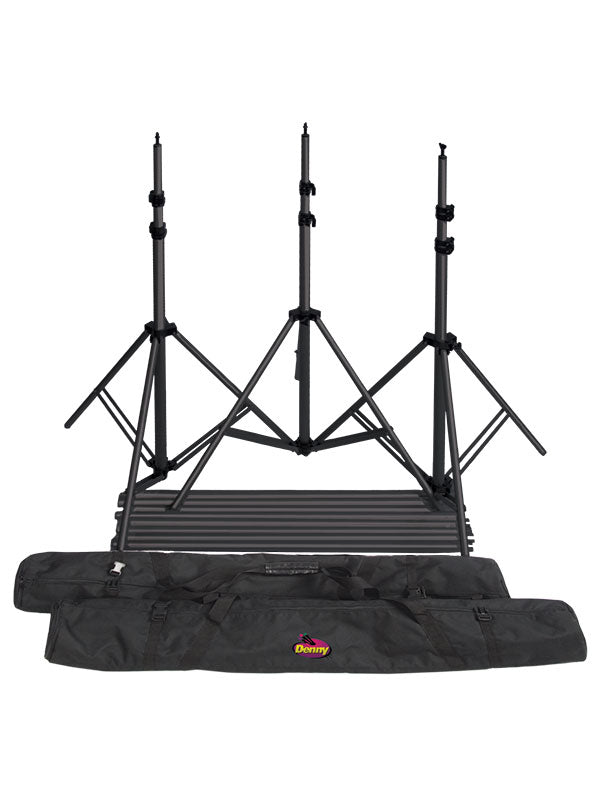
Most senior studios do not need a different set for every outfit. A practical rotation is a light neutral, a dark dramatic option, a textured environmental background, and one personality-driven color or scene. With compatible flooring and a dependable backdrop support system, those options can create a broad gallery while keeping transitions controlled.
Pay attention to material as closely as design. Canvas offers painterly depth and durability. Vinyl and printed surfaces can provide detailed scenes and wipe-clean convenience. Collapsible backgrounds are useful where storage and quick repositioning matter. The best choice depends on whether you need a permanent studio set, a portable setup, or a background that will see heavy session volume.
Give clients a setting that fits who they are, then make sure the technical details disappear in the finished image. When the backdrop, floor, light, and wardrobe work together, the senior remains the clear subject and the portrait feels built to last.